Consumer Court Directs Maruti Suzuki To Replace Car With E-20 Compliant Model
New Delhi: In a significant decision protecting consumer rights, a Consumer Court has directed Maruti Suzuki India Ltd. to replace a customer's vehicle with an E-20 fuel-compliant model, holding that consumers should not be adversely affected due to changes in fuel standards and technological advancements.
The case arose after the complainant purchased a Maruti Suzuki vehicle and later discovered that it was not compatible with E-20 fuel, which contains 20% ethanol blended with petrol. The customer argued that the lack of E-20 compatibility would impact the vehicle's long-term usability, resale value, and compliance with the Government of India's phased transition towards cleaner and more sustainable fuels.
During the proceedings, the complainant contended that the manufacturer had failed to adequately inform buyers about the vehicle's fuel compatibility and that consumers purchasing new vehicles reasonably expect them to comply with evolving regulatory and environmental standards.
After examining the facts, the Consumer Court held that a purchaser cannot be placed at a disadvantage because of changing fuel norms when a suitable alternative model is available. The Court observed that manufacturers have a responsibility to ensure that the products they supply meet applicable standards and provide consumers with accurate information regarding their capabilities.
Accordingly, the Consumer Court directed Maruti Suzuki to replace the customer's vehicle with an E-20 compliant model, ensuring that the buyer receives a vehicle compatible with the latest fuel requirements. The Court also emphasized that consumer rights must be protected where the product supplied fails to meet legitimate expectations arising from regulatory developments.
The ruling is expected to have broader implications for the automobile industry as India continues its transition towards ethanol-blended fuels under its clean energy and emission reduction initiatives. The decision also serves as a reminder that manufacturers must maintain transparency regarding vehicle specifications and ensure compliance with evolving environmental standards.
This judgment reinforces the principles of the Consumer Protection Act, affirming that consumers are entitled to fair treatment, complete disclosure, and products that satisfy reasonable quality and regulatory expectations.
Source: Trending Lawyers
Supreme Court
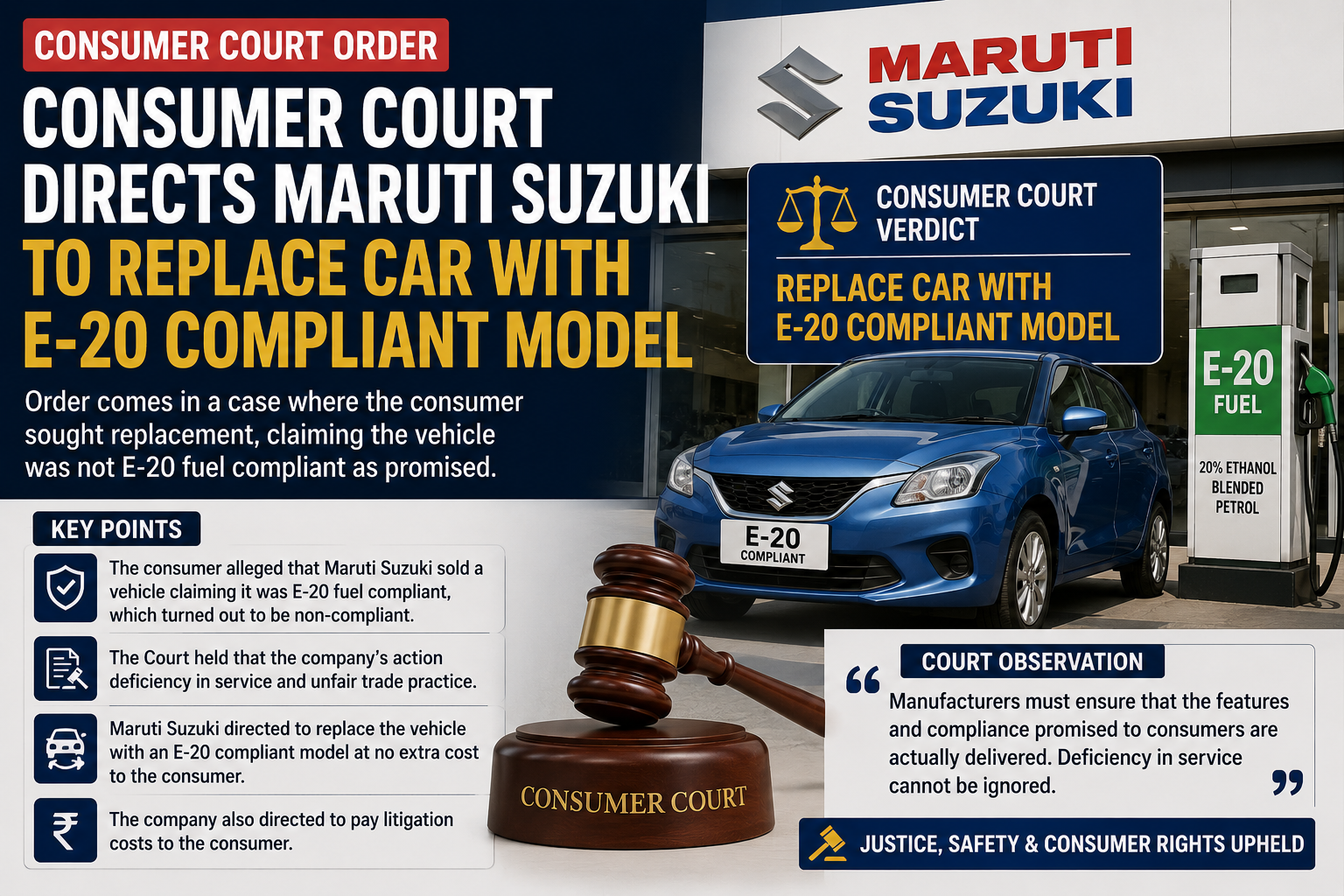
Consumer Court Directs Maruti Suzuki To Replace Car With E-20 Compliant Model
📅 16 July 2026
A Consumer Court has directed Maruti Suzuki India Ltd. to replace a customer's vehicle with an E-20 fuel-compliant model, holding that the buyer should not be disadvantaged due to changes in fuel standards and regulatory requirements. The complaint arose after the customer alleged that the purchased vehicle was not compatible with E-20 (20% ethanol-blended petrol), raising concerns about its long-term usability and resale value. The Consumer Court observed that consumers are entitled to receive products that meet prevailing standards and directed the manufacturer to provide an E-20 compliant replacement. The ruling highlights the responsibility of automobile manufacturers to ensure that vehicles supplied to customers comply with evolving environmental and fuel regulations while safeguarding consumer rights.
← Back to News